
En ny debatt om lagkrav för cyklister rullar igenom Sverige – men vad gäller egentligen redan idag, och vad kan vara på gång? Vi reder ut läget och ger dig konkreta råd för vardagscyklandet i Stockholm.
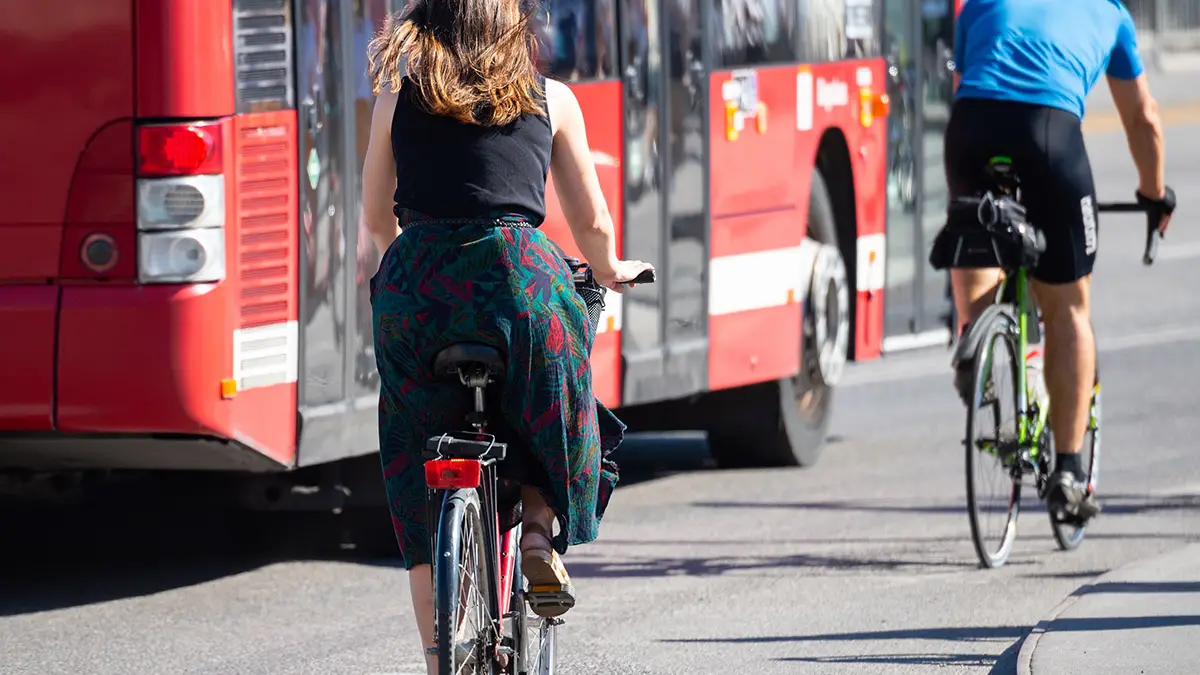
Det är inte första gången frågan dyker upp. Med jämna mellanrum flammar debatten upp om huruvida Sverige bör skärpa reglerna för cyklister – hjälmtvång för vuxna, krav på reflexer, tydligare trafikregler på cykel. Nu är frågan aktuell igen, och som stockholmare som dagligen navigerar mellan bussar på Hornsgatan, spårvagnar på Djurgårdsvägen och tusentals andra cyklister längs Centralbron är det värt att stanna upp och faktiskt förstå vad som gäller – och vad som kan komma att gälla.
Vad säger lagen idag?
I dag råder hjälmplikt för barn upp till en viss ålder i Sverige, men för vuxna cyklister är hjälm inte lagstadgat. Det är alltså frivilligt – även om få seriösa cyklister, och ännu färre som rör sig i Stockholms trafikkaos, väljer att skippa den. Däremot finns det regler som gäller alla trafikanter, cyklister inkluderade: du ska följa trafiksignaler, hålla till höger, använda cykelbanor där sådana finns och ha fungerande belysning i mörker.
Det är just den sista punkten många missar. Belysning är inte ett tips – det är ett krav. Och ändå ser vi varje kväll längs Södermalmstorg och vid Fridhemsplan cyklister som sveper förbi i mörkret utan ett enda ljus. Böter kan utdelas, men kontrollerna är sällsynta.
Vad är det nya kravet som diskuteras?
Det som nu diskuteras på politisk nivå handlar bland annat om att utvidga hjälmplikten till att gälla fler eller alla cyklister, samt att tydliggöra ansvarsfrågor vid olyckor. Bakgrunden är att cykelolyckor orsakar ett betydande antal allvarliga skador och dödsfall varje år i Sverige, och att en stor del av dessa drabbar huvudet. Förespråkarna menar att ett lagkrav skulle rädda liv. Kritikerna pekar på att tvång kan avskräcka folk från att cykla överhuvudtaget, vilket i sin tur vore negativt för folkhälsa och miljö.
Det handlar också om cyklist kontra fotgängare. I takt med att cyklingen ökar i städerna – och elcyklar gör att farten höjs – uppstår fler konflikter och olyckor i gångytor och på torg. Vem har ansvar när en cyklist kör in i en fotgängare? Reglerna är otydliga och det skapar frustration hos alla inblandade.
Stockholmsperspektivet – en stad med extra komplexa förutsättningar
Stockholm är ingen vanlig cykelstad. Vi har vatten, broar, branta backar, trånga innerstadsgator och ett lapptäcke av cykelinfrastruktur som varierar enormt mellan stadsdelar. På Kungsholmen kan du cykla nästan ostört längs välplanerade stråk. På Östermalm delar du gata med tunga fordon utan tydlig separation. Södermalm är en konstant improvisation.
Det här gör att regler behöver förstås i kontext. Att cykla på en gångbana är i grunden inte tillåtet – men på vissa platser i Stockholm finns ingen rimlig alternativ väg, och polisen blundar. Det skapar en gråzon där cyklister lär sig egna normer som inte alltid stämmer med lagen. Om nya regler införs måste de också följas upp med faktisk infrastruktur. Annars riskerar de att bli tomma ord.
Det här bör du redan göra – oavsett vad lagen säger
Oavsett vad politiker beslutar framöver finns det saker du som stockholmscyklist kan göra redan nu för att cykla säkrare och mer ansvarsfullt. Det handlar inte om att lyda blint – det handlar om att komma hem hel.
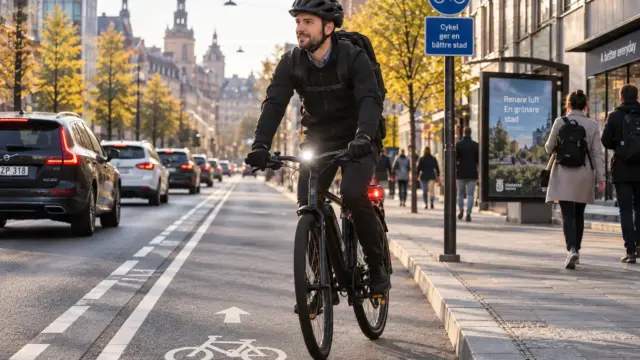
- Använd hjälm. Det låter banalt, men det är det viktigaste rådet. En hjälm av godkänd standard skyddar effektivt vid de vanligaste olyckstyperna. Välj en som passar dig och som du faktiskt vill ha på dig – för en hjälm du inte bär är värdelös.
- Säkra belysningen. Framlykta och bakreflex eller bakljus är lagkrav i mörker. Se till att batterierna är laddade och att ljusen syns ordentligt. I Stockholms mörka vintrar är detta inte förhandlingsbart.
- Använd cykelbanorna. Det kan verka långsammare ibland, men du är lagligt skyldig att använda dem där de finns. Det minskar också risken för konflikter med bilister.
- Signalera i god tid. Handtecken är inte bara artig – det är ett trafikrättsligt krav. Använd dem konsekvent, särskilt i korsningar och vid filbyten.
- Håll hastigheten nere bland fotgängare. Det handlar om respekt men också om ansvar. Om du orsakar en olycka kan du ställas juridiskt till svars, oavsett om det finns ett formellt hastighetskrav eller inte.
- Ha koll på rödljusen. Kör inte mot rött. Det är enkelt men ignoreras förvånansvärt ofta. Böter delas ut och du riskerar att orsaka allvarliga olyckor.
Elcykeln förändrar spelplanen
En viktig del av den aktuella debatten handlar specifikt om elcyklar. Dessa fordon kan hålla betydligt högre hastigheter än vanliga cyklar och upplevs av många fotgängare och bilister som ett nytt hot i trafiken. I dag klassas en elcykel med motorstöd upp till en viss hastighet som en vanlig cykel – men när farten överstiger den gränsen gäller andra regler och fordonet räknas inte längre som cykel i lagens mening.
Många elcykelägare i Stockholm är inte medvetna om dessa gränser. Om din elcykel är modifierad eller om du kör en kraftfullare modell kan du behöva körkort, försäkring och hjälm enligt regler som gäller moped. Det är värt att kontrollera din specifika modells klassificering.
Vad händer härnäst – och hur påverkar det dig?
Det är svårt att säga exakt när och om en ny lag träder i kraft. Politiska processer tar tid, remissvar ska behandlas och det finns starka intressen på båda sidor. Men oavsett utgång är trenden tydlig: kraven på cyklister ökar, och det är en rimlig spegling av att cykeln har blivit ett riktigt transportmedel – inte en bisyssla för sportentusiaster.
Som aktiv cyklist i Stockholm tjänar du på att ligga steget före. Sätt dig in i gällande regler, anpassa ditt beteende och rusta dig med rätt utrustning. Det gör inte bara dig säkrare – det gör hela staden bättre att röra sig i för alla som delar gaturummet med dig.
Stockholm behöver fler cyklister, inte färre. Men det förutsätter att vi som cyklar tar vårt ansvar på allvar – med eller utan lagkrav i ryggen.
A new debate about legal requirements for cyclists is rolling through Sweden – but what actually applies today, and what might be coming? We clarify the situation and give you concrete advice for everyday cycling in Stockholm.
It’s not the first time the question has come up. At regular intervals, the debate flares up about whether Sweden should tighten the rules for cyclists – mandatory helmets for adults, requirements for reflectors, clearer traffic rules on bicycles. Now the question is current again, and as a Stockholmer who navigates daily between buses on Hornsgatan, trams on Djurgårdsvägen and thousands of other cyclists along Centralbron, it’s worth pausing to actually understand what applies – and what might come to apply.
What does the law say today?
Today, helmet requirements apply to children up to a certain age in Sweden, but for adult cyclists, helmets are not legally mandated. So it’s voluntary – even though few serious cyclists, and even fewer moving through Stockholm’s traffic chaos, choose to skip it. However, there are rules that apply to all road users, cyclists included: you must follow traffic signals, keep to the right, use cycle paths where they exist and have functioning lights in the dark.
It’s precisely this last point that many miss. Lighting is not a suggestion – it’s a requirement. And yet every evening along Södermalmstorg and at Fridhemsplan we see cyclists sweeping past in the dark without a single light. Fines can be issued, but checks are rare.
What is the new requirement being discussed?
What is now being discussed at the political level includes expanding helmet requirements to apply to more or all cyclists, as well as clarifying responsibility issues in accidents. The background is that bicycle accidents cause a significant number of serious injuries and deaths every year in Sweden, and a large portion of these affect the head. Proponents argue that a legal requirement would save lives. Critics point out that mandatory requirements could discourage people from cycling altogether, which in turn would be negative for public health and the environment.
It’s also about cyclists versus pedestrians. As cycling increases in cities – and e-bikes cause speeds to rise – more conflicts and accidents occur in pedestrian areas and on squares. Who is responsible when a cyclist hits a pedestrian? The rules are unclear and it creates frustration among everyone involved.
The Stockholm perspective – a city with extra complex conditions
Stockholm is not a typical cycling city. We have water, bridges, steep hills, cramped inner-city streets and a patchwork of cycling infrastructure that varies enormously between neighborhoods. In Kungsholmen you can cycle almost unimpeded along well-planned routes. In Östermalm you share the street with heavy vehicles without clear separation. Södermalm is a constant improvisation.
This means that rules need to be understood in context. Cycling on a pedestrian path is fundamentally not allowed – but in certain places in Stockholm there is no reasonable alternative route, and the police turn a blind eye. This creates a gray zone where cyclists learn their own norms that don’t always match the law. If new rules are introduced, they must also be followed up with actual infrastructure. Otherwise, they risk becoming empty words.
Here’s what you should already do – regardless of what the law says
Regardless of what politicians decide in the future, there are things you as a Stockholm cyclist can do right now to cycle more safely and responsibly. It’s not about blindly obeying – it’s about getting home in one piece.
- Use a helmet. It sounds banal, but it’s the most important advice. A helmet of approved standard protects effectively against the most common accident types. Choose one that fits you and that you actually want to wear – because a helmet you don’t wear is worthless.
- Secure your lighting. Front light and rear reflector or rear light are legal requirements in the dark. Make sure the batteries are charged and that the lights are clearly visible. In Stockholm’s dark winters, this is non-negotiable.
- Use the cycle paths. It may seem slower sometimes, but you are legally required to use them where they exist. It also reduces the risk of conflicts with motorists.
- Signal in good time. Hand signals are not just polite – they are a traffic law requirement. Use them consistently, especially at intersections and when changing lanes.
- Keep your speed down among pedestrians. It’s a matter of respect but also responsibility. If you cause an accident, you can be held legally accountable, whether or not there is a formal speed requirement.
- Watch the red lights. Don’t run red lights. It’s simple but surprisingly often ignored. Fines are issued and you risk causing serious accidents.
The e-bike changes the playing field
An important part of the current debate specifically concerns e-bikes. These vehicles can maintain significantly higher speeds than regular bicycles and are perceived by many pedestrians and motorists as a new threat in traffic. Today, an e-bike with motor assistance up to a certain speed is classified as a regular bicycle – but when the speed exceeds that limit, other rules apply and the vehicle no longer counts as a bicycle in the eyes of the law.
Many e-bike owners in Stockholm are not aware of these limits. If your e-bike is modified or if you ride a more powerful model, you may need a driver’s license, insurance and helmet according to rules that apply to mopeds. It’s worth checking the classification of your specific model.
What happens next – and how does it affect you?
It’s difficult to say exactly when and if a new law will come into effect. Political processes take time, consultation responses must be processed and there are strong interests on both sides. But regardless of the outcome, the trend is clear: the requirements for cyclists are increasing, and it’s a reasonable reflection of the fact that the bicycle has become a real means of transport – not a hobby for sports enthusiasts.
As an active cyclist in Stockholm, you benefit from staying one step ahead. Familiarize yourself with current rules, adapt your behavior and equip yourself with the right equipment. It not only makes you safer – it makes the whole city better to move around in for everyone who shares the street space with you.
Stockholm needs more cyclists, not fewer. But that requires that we who cycle take our responsibility seriously – with or without legal requirements backing us up.