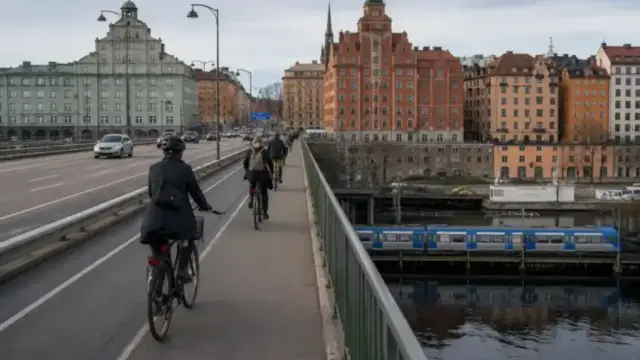


Sverige har ungefär 20 000 kilometer cykelnät, enligt Trafikverkets statistik. Det är imponerande i ett internationellt perspektiv – men en välbyggd cykelväg räcker inte för att alla ska cykla. En ny studie visar att socioekonomisk tillhörighet spelar en avgörande roll för om vi faktiskt väljer cykeln i vardagen.
Cykelpolitik byggd för kontorsarbetaren
Konsultbolaget Trivector Mobility har tillsammans med VTI, Statens väg- och transportforskningsinstitut, genomfört djupintervjuer med cyklister och icke-cyklister i låginkomstyrken i Östergötland. Forskarna har undersökt hur resvanorna förändrats över tid – och resultaten utmanar bilden av vem cykelsatsningar egentligen är till för.
Lena Smidfelt Rosqvist, vd på Trivector Mobility, konstaterar att många cykelstrategier underförstått utgår från personer med flexibla arbetstider och kontorsarbete. Men för den som jobbar tidiga morgonpass inom vård, handel eller industri ser vardagen annorlunda ut. Fysiskt krävande arbete gör att cyklingen ibland upplevs som ytterligare en belastning snarare än ett smidigt transportmedel.
Otrygghet stoppar fler än dåliga vägar
En återkommande faktor i intervjuerna är känslan av otrygghet. Att cykla i mörker eller genom miljöer som upplevs som ödsliga kan göra att andra färdsätt känns mer attraktiva – även när cykelinfrastrukturen i sig är fullt acceptabel.
Kopplingen till arbetsvillkoren är direkt: den som börjar jobba klockan fem på morgonen eller slutar sent på kvällen rör sig ute när det är glest med folk och dåligt upplyst. Enligt Lena Smidfelt Rosqvist är trygghetsfrågan i de sammanhangen avgörande men lyfts sällan i den ordinarie debatten om hur cykling ska öka.
Åtgärder som förbättrad belysning, levande stadsmiljöer och trygg cykelparkering dygnet runt lyfts fram som centrala – inte bara nya separerade cykelbanor. I Stockholm, där pendlingstiderna ofta är långa och varierande, är dessa frågor minst lika relevanta som i landets övriga städer.
En stulen cykel kan betyda slutet för cykelvanan
Studien visar att cykelstölder är ett utbrett problem bland deltagarna, och konsekvenserna är inte enbart ekonomiska. För personer med begränsade resurser kan en stulen cykel innebära att man slutar cykla helt och hållet.
Avgörande är om personen redan har en etablerad cykelrutin eller inte. Den som är van cyklist köper en ny cykel och fortsätter. Den som ännu inte byggt upp en stark vana använder stölden som en naturlig brytpunkt – och väljer bort cykeln för gott. Det gör säker cykelparkering till en demokratifråga, inte bara en bekvämlighet.
Arbetsgivaren har mer makt än man tror
Förutom infrastruktur och trygghet lyfter Lena Smidfelt Rosqvist arbetsgivarens roll. Tillgång till cykelparkering, omklädningsrum, förmånscyklar och prova-på-kampanjer är åtgärder som arbetsgivare kan vidta för att göra cyklingen mer tillgänglig. Kollegornas inställning spelar också roll – en arbetsplatskultur där cykling normaliseras sänker tröskeln.
Elsparkcykeln är en oväntad konkurrent
Studien visar att cykeln inte bara konkurrerar med bilen – den konkurrerar också med elsparkcykeln, framför allt bland yngre. Elsparkcyklar beskrivs av deltagarna som enklare, renare och mer bekväma. De kräver mindre planering, behöver inte förvaras hemma och upplevs inte som svettiga att använda. Det är en utmaning för alla som vill öka cyklingens andel av resorna.
Infrastruktur är också beredskap
Studien pekar även på ett mer oväntat argument för att bygga ut cykelnätet: samhällsberedskap. Lena Smidfelt Rosqvist hänvisar till Ukraina som ett konkret exempel, där kriget slog ut infrastrukturen och tvingade människor att ta fram gamla cyklar för att överhuvudtaget kunna förflytta sig. Det är en påminnelse om att cykeln är mer än ett miljöval – den är ett resilient transportmedel i kristider.
Slutsatsen från studien är tydlig: en bred och rättvis cykelpolitik kräver mer än välplanerade cykelbanor. Den måste också adressera trygghet, ekonomisk sårbarhet och arbetsvillkor – annars riskerar vi att bygga infrastruktur för dem som redan cyklar.
Sweden has approximately 20,000 kilometers of cycling networks, according to the Swedish Transport Administration’s statistics. It is impressive from an international perspective – but a well-built bike path is not enough for everyone to cycle. A new study shows that socioeconomic background plays a crucial role in whether we actually choose to cycle in our daily lives.
Cycling policy built for office workers
The consulting firm Trivector Mobility, together with VTI, the Swedish National Road and Transport Research Institute, conducted in-depth interviews with cyclists and non-cyclists in low-income occupations in East Gothia. The researchers examined how travel patterns have changed over time – and the results challenge the image of who cycling initiatives are actually for.
Lena Smidfelt Rosqvist, CEO of Trivector Mobility, notes that many cycling strategies implicitly assume people with flexible working hours and office work. But for those working early morning shifts in care, retail, or industry, everyday life looks different. Physically demanding work means that cycling is sometimes experienced as an additional burden rather than a convenient mode of transport.
Insecurity stops more people than poor roads
A recurring factor in the interviews is the sense of insecurity. Cycling in the dark or through environments that feel desolate can make other modes of transport feel more attractive – even when the cycling infrastructure itself is perfectly acceptable.
The connection to working conditions is direct: someone who starts work at five in the morning or finishes late in the evening moves around when there are few people about and poor lighting. According to Lena Smidfelt Rosqvist, the safety issue in these contexts is decisive but is rarely raised in the ordinary debate about how to increase cycling.
Measures such as improved lighting, vibrant urban environments, and safe bike parking around the clock are highlighted as central – not just new separated bike lanes. In Stockholm, where commute times are often long and variable, these issues are at least as relevant as in the rest of the country’s cities.
A stolen bike can mean the end of cycling habits
The study shows that bike theft is a widespread problem among participants, and the consequences are not just financial. For people with limited resources, a stolen bike can mean stopping cycling altogether.
What matters is whether the person already has an established cycling routine or not. Someone who is used to cycling buys a new bike and continues. Someone who has not yet built a strong habit uses the theft as a natural break point – and chooses to abandon cycling for good. This makes secure bike parking a democracy issue, not just a convenience.
Employers have more power than you might think
Beyond infrastructure and safety, Lena Smidfelt Rosqvist highlights the employer’s role. Access to bike parking, changing rooms, subsidized bikes, and try-it-out campaigns are measures that employers can take to make cycling more accessible. Colleagues’ attitudes also matter – a workplace culture where cycling is normalized lowers the threshold.
The e-scooter is an unexpected competitor
The study shows that the bike does not only compete with the car – it also competes with the e-scooter, especially among younger people. E-scooters are described by participants as easier, cleaner, and more convenient. They require less planning, do not need to be stored at home, and are not perceived as making you sweaty. It is a challenge for everyone who wants to increase cycling’s share of trips.
Infrastructure is also preparedness
The study also points to a more unexpected argument for expanding the cycling network: civil defense. Lena Smidfelt Rosqvist refers to Ukraine as a concrete example, where the war destroyed infrastructure and forced people to dig out old bikes just to be able to move around at all. It is a reminder that the bike is more than an environmental choice – it is a resilient mode of transport in times of crisis.
The conclusion from the study is clear: a broad and fair cycling policy requires more than well-planned bike lanes. It must also address safety, economic vulnerability, and working conditions – otherwise we risk building infrastructure for those who already cycle.